Research

Understanding the biology that makes metastasis possible.

Our lab studies how pancreatic cancer cells change during dissemination, therapy, and metastatic outgrowth, and which of those changes create targetable dependencies.

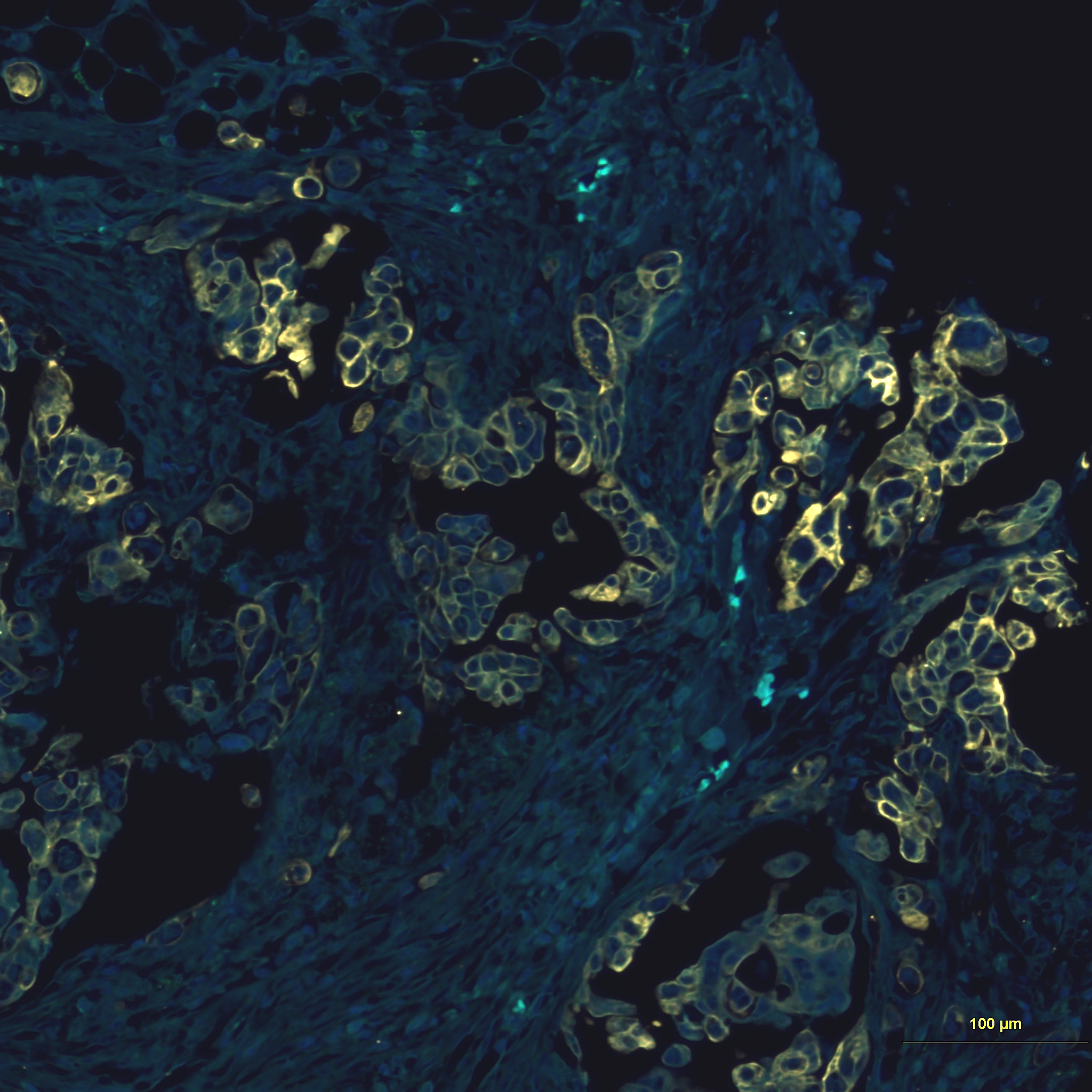
GSTT1 and pFGFR3 staining in metastatic pancreatic cancer tissue
GSTT1 and pFGFR3 staining in metastatic pancreatic cancer tissueFerrer Lab
01

Metastatic cell states and adaptations

Metastatic tumors contain multiple tumor-cell states. We identify the states that enable pancreatic cancer cells to disseminate, survive, and expand at distant sites, with a focus on GSTT1-high cells and how GSTT1 regulates proliferation, extracellular matrix remodeling, and stem-like behavior.

Which tumor-cell states are selectively required for metastasis?
02

Drug-tolerant persister cells

A small fraction of cancer cells can survive therapy without acquiring a permanent resistance mutation. We use cell-cycle tracing and longitudinal models to define how these slow-cycling persister cells emerge, endure treatment, and later reawaken.

How does a surviving cell become the seed of recurrent disease?
03

Tumor and immune interactions

Immune cells can eliminate disseminated cancer cells, but they can also reshape the behavior of survivors. We study how interactions between macrophages and tumor cells regulate immune evasion, cell death, inflammatory signaling, and invasion across heterogeneous metastatic cell states.

What determines whether immune surveillance prunes or promotes metastasis?
04

Metabolic dependencies in pancreatic cancer

Tumor genotype and cell state can create distinct nutrient requirements. We investigate how pancreatic cancer cells use purine salvage and other metabolic pathways to adapt to stress, and whether these dependencies can be targeted.

Can tumor-specific metabolic adaptation become a therapeutic vulnerability?

How we work

We test mechanisms across cell, organoid, and in vivo models.

We combine genetic and pharmacological perturbation with live-cell tracing, organoid and co-culture systems, flow cytometry, transcriptomics, metabolomics, and in vivo models of pancreatic cancer.